Background
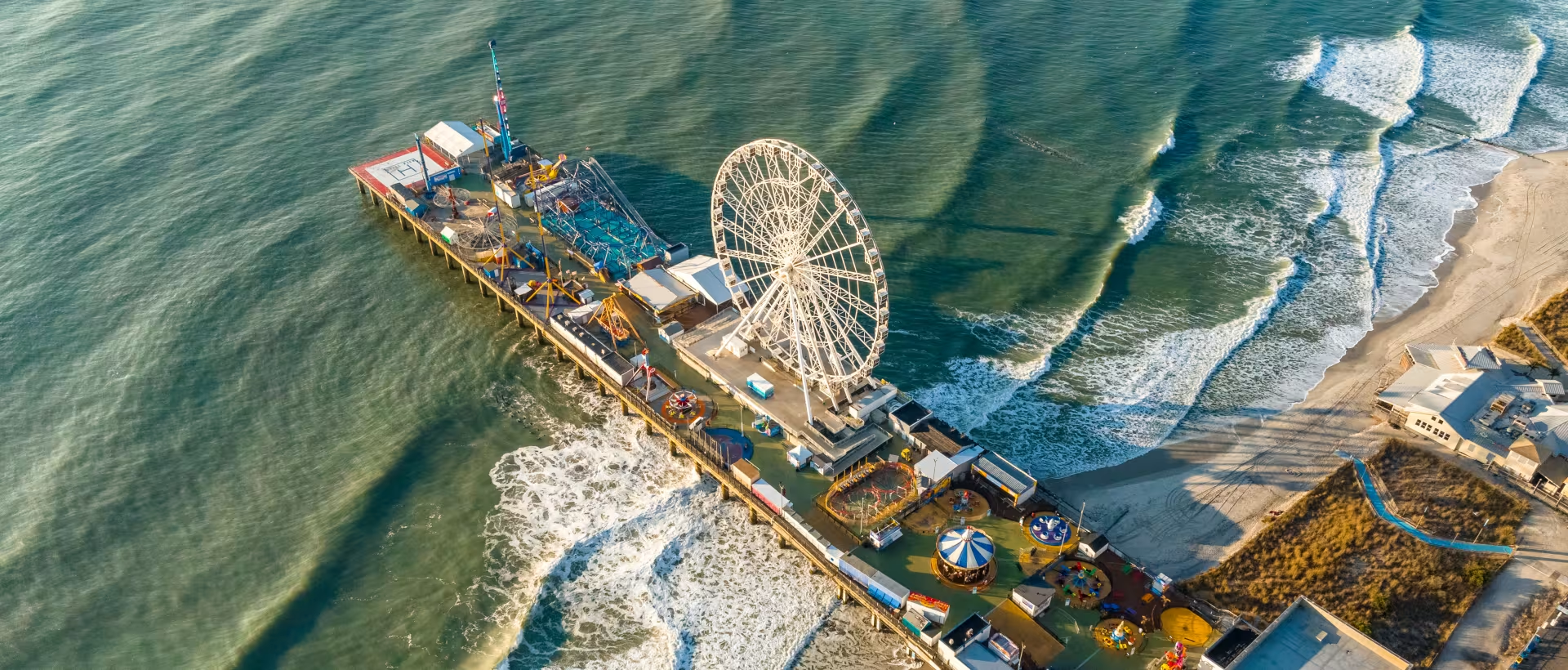
Atlantic City is a traditional resort city located on the southeastern coast of New Jersey. Historically, the city evolved into a regional beach destination connected to the larger Northeast and Mid-Atlantic markets—particularly Philadelphia and New York. Today, Atlantic City remains a tourism hub, drawing visitors to its beaches, boardwalk, casinos, nightlife, entertainment, and summer water recreation activities. City officials describe Atlantic City as a premier East Coast resort and gaming destination, attracting over 27 million visitors annually. Atlantic County remains one of New Jersey’s largest tourism markets, recording approximately 24 million visitors according to recent tourism data (Tourism Economics, 2025).
This tourism-driven economy creates a stark contrast between Atlantic City’s visitors and its year-round residents. Atlantic City is home to approximately 38,500 residents, many of whom are low-income earners. Census data indicates a median household income of approximately $41,028 and a poverty rate of 32.3%. This poverty rate is more than double the rates found in Atlantic County and New Jersey as a whole. (U.S. Census Bureau, 2024) Consequently, water affordability has emerged as a major concern. Even if average water bills appear affordable when compared against the median income, this metric masks the financial burden faced by households living below the poverty line.
This affordability crisis was further exacerbated following the expiration of the federal Low Income Household Water Assistance Program (LIHWAP) in 2023. (New Jersey Department of Community Affairs, n.d.) While LIHWAP previously helped low-income households cover their water and wastewater bills, its absence leaves Atlantic City residents with significantly fewer safeguards against the burden of water costs and the threat of service disconnections. Prior studies have found that this gap jeopardizes low-income households’ access to safe drinking water and basic sanitation.
Atlantic City’s water supply system is also institutionally fragmented. Drinking water is managed by the Atlantic City Municipal Utilities Authority (ACMUA). Sewer collection and stormwater infrastructure are managed by the Atlantic City Sewerage Company (ACSC). Wastewater treatment and disposal fall under the purview of the Atlantic County Utilities Authority (ACUA). As a result, residents do not pay a single entity for all water-related services. (ACMUA, 2026; ACSC, 2025) This organizational structure makes water billing more difficult to understand and complicates the coordination of long-term resilience planning.
The physical water infrastructure itself also relies heavily on groundwater sources. Atlantic City’s primary sources of drinking water are the Atlantic City 800-foot aquifer and the Great Egg Harbor River aquifer zone. Both are part of the broader Kirkwood-Cohansey aquifer system, which underlies much of the southern coastal region of New Jersey (USGS, n.d.; NJDEP, 2004). Atlantic City does not currently face a problem of absolute water scarcity. Its supply is drawn from multiple sources, including groundwater wells, a surface water intake, regional groundwater supplies, the Kirkwood-Cohansey aquifer system, the Atlantic City 800-foot sand aquifer, and the Doughty Pond Reservoir.

However, the city faces long-term risks regarding water security. Atlantic City’s current water portfolio relies predominantly on groundwater, with surface water and imported sources contributing a much smaller share. This heavy reliance on a single primary source increases vulnerability to saltwater intrusion, over-extraction, sea-level rise, and infrastructure failure. In this sense, Atlantic City’s challenge is not one of immediate physical scarcity, but rather one of managerial and ecological scarcity: the water exists, but maintaining its quality, reliability, and affordability requires careful management.
Water quality issues introduce an additional layer of risk. Regarding drinking water, source vulnerability is a major concern. Earlier studies found that many of Atlantic City’s water sources exhibit moderate to high susceptibility to contaminants such as nutrients, pathogens, pesticides, and volatile organic compounds. Contamination by perfluorooctanesulfonic acid (PFOS) and issues with lead service lines also necessitate treatment upgrades and infrastructure investment. Regarding stormwater, runoff carries sediment, nutrients, oil, and other pollutants from impervious surfaces into nearby bays and coastal waters. In some instances, stormwater is discharged without treatment. Regarding wastewater, the ACUA’s regional treatment system represents an improvement over older systems, yet it remains vulnerable to heavy rainfall, storm surges, and flooding.


Flooding stands as one of Atlantic City’s most visible water-related challenges. Situated on a low-lying barrier island, the city is exposed to coastal flooding, tidal, storm surges, and heavy rainfall-induced flooding. Flooding is concentrated in the back-bay areas, near canals, and around stressed stormwater infrastructure. It impacts households, transportation systems, and critical water and wastewater infrastructure. Moreover, the frequency of flooding is on the rise. Data from Rutgers University, cited in early studies, indicates that in the 1950s, Atlantic City experienced fewer than one day of minor flooding per year; however, between 2015 and 2024, the city experienced an average of 13.1 such days annually. Projections forecast this figure to reach 30 days by 2030, and between 95 and 135 days per year by 2050 (Rutgers Climate Resource Center, 2024).

Map of Atlantic City Water Features
These environmental risks are inextricably linked to finance and governance. Atlantic City requires investment in its pipelines, pumps, flood defenses, drainage systems, water quality, and the long-term reliability of its water supply. Yet, the current institutional framework fragments water-related responsibilities across multiple entities, failing to provide a clear financial framework for building resilience.
Intervention
This blog focuses on a concrete intervention: the creation of a new coordinating body—the Atlantic City Water Authority (ACWA)—designed to enhance billing clarity, support affordability, and secure funding for resilience initiatives.
Why this works

The first reason is institutional fragmentation. Drinking water is managed by the ACMUA; sewer collection and associated infrastructure are managed by the ACCC; and wastewater treatment is handled by the ACUA. This means that residents do not pay a single organization for all their water-related services; instead, each component of the system operates under its own distinct financial structure and planning priorities. This separation complicates the coordination of long-term investments—particularly when a single climatic event simultaneously impacts multiple systems. For instance, flooding can damage streets, inundate stormwater infrastructure, place strain on the sewer system, and disrupt wastewater treatment operations. Yet, these responsibilities are not currently managed through a unified resilience framework.
The second reason is billing clarity. Atlantic City’s current water and wastewater bills are difficult to decipher because they are constructed using separate rate structures. Drinking water charges consist of a quarterly base fee plus usage fees applied after a specific allowance, whereas wastewater charges comprise a fixed annual fee, volume-based fees, and adjustments for purchased treatment services. For residents, this creates ambiguity regarding exactly what they are paying for—whether it be basic drinking water services, sewer collection, wastewater treatment, infrastructure maintenance, or future resilience initiatives. Establishing the ACWA will not automatically lower water costs, but it will enable Atlantic City to redesign its billing system so that every specific charge serves a clear and transparent purpose.
The third reason is affordability. When measured against the median household income, Atlantic City’s water bills may appear manageable; however, this metric fails to reflect the reality faced by many residents. According to studies, a family of four is estimated to pay approximately $86.86 per month for drinking water and wastewater services—a figure representing roughly 2.54% of the median household income (ACMUA, 2026; NJBPU, 2025). Nevertheless, Atlantic City suffers from a high poverty rate, with approximately 32.3% of its residents living below the poverty line (U.S. Census Bureau, 2024). For these families, even bills that appear affordable at the median income level can become a source of financial strain—particularly if rates rise to fund climate adaptation measures and infrastructure repairs.
The fourth rationale concerns funding for climate resilience. Atlantic City has already experienced frequent flooding, and this problem is projected to worsen. In the 1950s, the city experienced fewer than one day of minor flooding per year; however, between 2015 and 2024, this average surged to 13.1 days annually. Projections indicate that this figure could reach 30 days by 2030, and between 95 and 135 days by 2050 (Rutgers Climate Resource Center, 2024). Consequently, Atlantic City will need to continue investing in pumping stations, drainage systems, bulkheads, pipe replacements, and stormwater management improvements. A dedicated ACWA Water Resilience Fund would establish a more transparent mechanism for raising and allocating the capital required to address these critical needs.
The fifth rationale centers on equity between residential users and tourism-related entities. Atlantic City’s hotels, casinos, restaurants, and entertainment venues rely heavily on reliable water supply, sewer systems, wastewater treatment, flood control, and coastal infrastructure. These establishments also generate significantly higher water demand—particularly during the peak summer tourist season. Since the tourism economy benefits directly from Atlantic City’s water infrastructure, high-volume users should contribute more directly to resilience costs through measures such as high-usage surcharges, peak-season surcharges, and dedicated resilience fees.
Specific Proposal
1. Simplify the bill, not hiding costs
ACWA’s ability to simplify billing stems from more than just the creation of a new entity; a new institution alone does not automatically simplify anything. Billing becomes simpler only when ACWA redesigns the billing structure to ensure that customers can clearly see the specific charges they are paying.
The current billing system is complex because drinking water and wastewater are priced separately. For drinking water, ACMUA’s 2026 residential rates include an $89 quarterly base fee, which covers an allowance of 2,500 cubic feet of water which approximately 18,700 gallons. Usage exceeding this allowance is charged at a rate of $4.981 per 100 cubic feet (ACMUA, 2026). Commercial and industrial users are billed differently, based on meter size and actual consumption.
Wastewater pricing is even more tiered. Atlantic City’s wastewater bill consists of three components: a fixed annual fee based on meter size; a volumetric charge based on water usage; and the Purchased Sewage Treatment Adjustment Clause (PSTAC), which passes wastewater treatment costs from ACUA directly to the customer (NJBPU, 2021; NJBPU, 2025).

Chart of Current Problems and ACWA Solutions

Chart of ACWA Simplified Bill Structure
2. ACWA Water Resilience Fund
The next step is to establish an ACWA Water Resilience Fund. This fund will raise capital through resilience fees, high-usage surcharges, peak-season tourism surcharges, grants, bonds, and state or federal infrastructure programs.
This is essential because Atlantic City’s infrastructure needs extend beyond routine operations. The city requires long-term investment in flood control, drainage, pump stations, sewer maintenance, pipe replacement, lead service line replacement, treatment upgrades, and stormwater management improvements.
Atlantic City has already utilized a variety of financial instruments. ACMUA funds capital improvements including treatment plant upgrades and lead service line replacements through rate revenue, debt financing, grants, and low-interest loans (ACMUA, 2025). ACSC has also been authorized to issue up to $15 million in long-term debt to finance infrastructure upgrades and system expansions (NJBPU, 2025).
The issue is that these funding streams are not currently organized within a visible resilience framework. ACWA’s Water Resilience Fund will bring much-needed clarity to this process. Funds raised for resilience purposes should be legally restricted to water-related infrastructure projects and affordability initiatives. Eligible uses should include:
Pipeline replacement, pump station upgrades, flood control, drainage improvements, stormwater infrastructure, upgrades to address perfluorooctane sulfonic acid (PFOS), lead service line replacement, and affordability assistance.
3. Protect low-income residents with an affordability credit
Rate reform must incorporate affordability protections. Under Allocation 3 estimates, based on a four-person household using 50 gallons per person per day, a family would pay approximately $86.86 per month for drinking water and wastewater services. This amounts to roughly $1,042 annually, representing 2.54% of the median household income in Atlantic City (ACMUA, 2026; NJBPU, 2021).
At the median income level, this may appear quite affordable. However, Atlantic City is home to many low-income residents; approximately 32.3% of its residents live below the poverty line compared to 12% in Atlantic County and 9.7% statewide in New Jersey. This means that more than 12,500 residents could be particularly vulnerable to the impact of rising water rates (U.S. Census Bureau, 2024).

Chart of ACWA Affordability Credit Structure
4. Add high-use and peak-season surcharges for casinos and hotels
The most impactful component of these intervention measures is the rate structure applied to large-scale, tourism-related users. Atlantic City’s casinos, hotels, restaurants, and entertainment venues rely heavily on reliable water, sewer, wastewater, stormwater, and flood control systems (City of Atlantic City, n.d.; Visit Atlantic City, n.d.). During peak tourism seasons, these entities also generate significantly higher demand. Consequently, the proposal should incorporate a specialized rate design specifically tailored to large commercial users, particularly casinos and hotels.

Chart of ACWA Rate Structure for Casinos and Hotels
5. Diversify Water Source Portfolio
Atlantic City’s current water supply relies predominantly on groundwater (90%), with surface water and imported sources contributing only marginally (5% each) (ACMUA, 2026; NJDEP, 2004). This heavy reliance on a single source heightens vulnerability to climate-related risks, such as saltwater intrusion, over-extraction, and rising sea levels. This limited diversification diminishes the system’s flexibility and long-term resilience.
The new ACWA entity could reduce reliance on groundwater to investing in recycled water practices and rainwater harvesting. This approach strengthens resilience by spreading risk across multiple sources, improving reliability under climate stress and supporting sustainable long-term water management, while balancing costs with a mix of traditional and alternative supply sources.
Conclusion
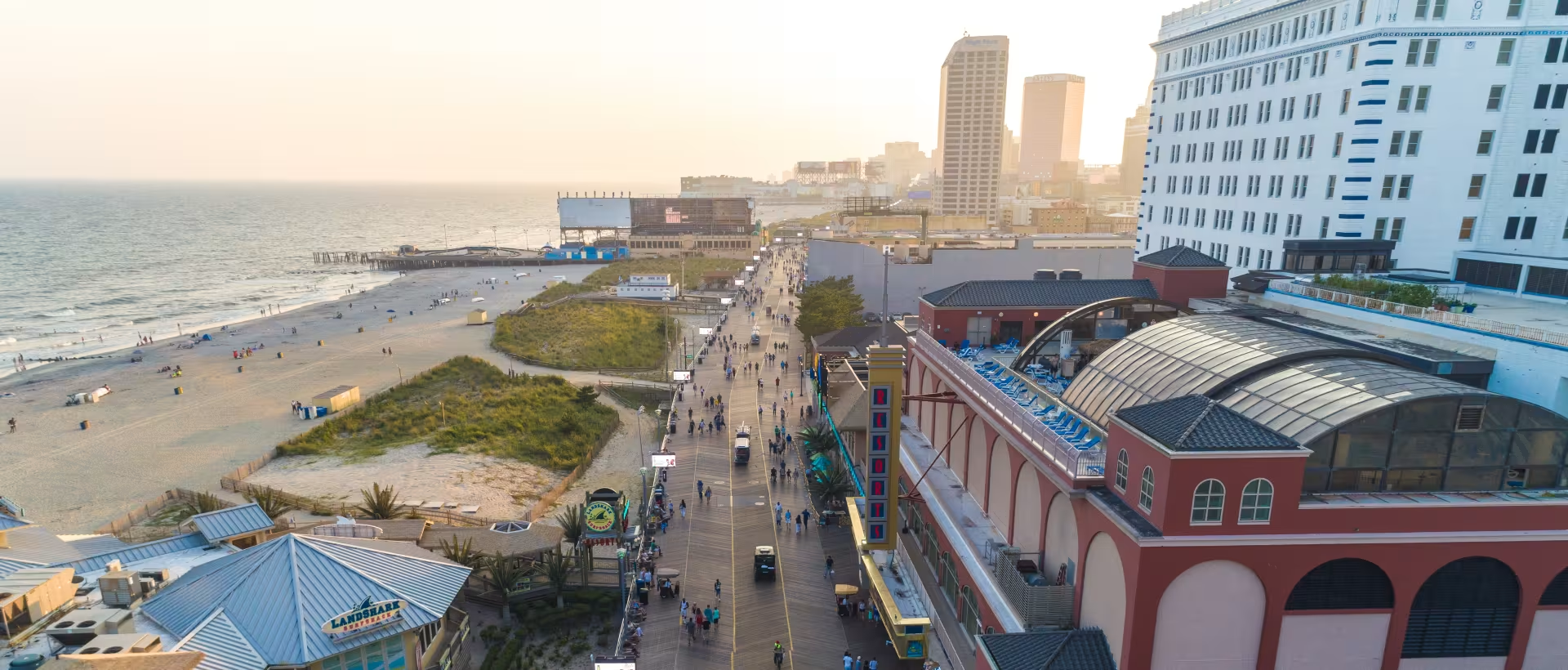
In conclusion, the creation of the Atlantic City Water Authority (ACWA) would provide an opportunity to modernize and strengthen the city’s fragmented water governance system. By consolidating drinking water, sewer collection, wastewater treatment, and resilience planning under a more unified framework, Atlantic City could improve coordination among agencies and respond more effectively to the growing challenges posed by climate change. Rather than maintaining separate institutions with disconnected priorities, the ACWA would allow the city to approach water management as an interconnected public service essential to public health, economic stability, and environmental resilience.
Additionally, the establishment of the ACWA would promote greater transparency and fairness for residents. A redesigned billing structure could clearly identify how funds are allocated toward water supply, wastewater treatment, infrastructure maintenance, and long-term resilience investments. This clarity is especially important in a city where many households already experience financial hardship. As flooding risks increase and infrastructure costs continue to rise, policymakers must ensure that future investments do not disproportionately burden low-income residents. A unified authority would create a stronger foundation for implementing affordability protections while still securing the revenue necessary to maintain critical infrastructure.
Finally, the ACWA would help Atlantic City prepare for a future in which climate resilience becomes increasingly urgent. Rising flood frequency, aging infrastructure, and the demands of a tourism-driven economy require long-term investment strategies that are coordinated, equitable, and financially sustainable. By creating dedicated resilience funding mechanisms and requiring higher-volume commercial users to contribute more directly to system costs, the city could distribute responsibilities more fairly across all beneficiaries of the water system. Ultimately, the ACWA represents not only an administrative reform, but also a strategic investment in Atlantic City’s long-term sustainability, economic vitality, and quality of life.
References
Atlantic City Municipal Utilities Authority. (2025a). Adopted budget. https://acmua.org/wp-content/uploads/2025/10/2025-Adopted-Budget-ACMUA.pdf
Atlantic City Municipal Utilities Authority. (2025b). Press release: 2026 budget and rate hearing. https://acmua.org/wp-content/uploads/2025/10/PressRelease-2026.pdf
Atlantic City Municipal Utilities Authority. (2026). Rules, rates, and regulations. https://acmua.org/wp-content/uploads/2026/01/2026_Rules_Rates_Regulations_111325_No-highlights.pdf
Atlantic City Sewerage Company. (n.d.-a). Company information. https://acsewerage.com/company-info.htm
Atlantic City Sewerage Company. (n.d.-b). Fact sheet. https://acsewerage.com/facksheet.htm
Atlantic City Sewerage Company. (2025). Tariff and rate information.
Atlantic County Utilities Authority. (n.d.-a). History. https://www.acua.com/About/History.aspx
Atlantic County Utilities Authority. (n.d.-b). Wastewater disposal. https://www.acua.com/Services/Service-Directory/Wastewater-Disposal.aspx
Atlantic County Utilities Authority. (n.d.-c). Wastewater & our sewers. https://www.acua.com/Community-Hub/Educational-Resources/Wastewater-Our-Sewers.aspx
City of Atlantic City. (n.d.). Stormwater management program. https://www.acnj.gov/pages/stormwater-management
Greater Atlantic City Chamber. (n.d.). ACUA to test microplastic filtration system at its wastewater treatment facility.
New Jersey Board of Public Utilities. (2021). Order on Atlantic City Sewerage Company base rate case.
New Jersey Board of Public Utilities. (2025). Order approving long-term debt financing for Atlantic City Sewerage Company.
New Jersey Casino Reinvestment Development Authority. (2021). Atlantic City Tourism District master plan. https://njcrda.com/wp-content/uploads/documents/2021/06/Tourism-District-Master-Plan-Vol.1.pdf
New Jersey Department of Community Affairs. (n.d.). Low Income Household Water Assistance Program FAQ. https://www.nj.gov/dca/dhcr/offices/lihwap_faq.shtml
New Jersey Department of Environmental Protection. (2004). Source Water Assessment Report: Atlantic City Municipal Utilities Authority. https://www.nj.gov/dep/swap/reports/sumdoc_0102001.pdf
NJ SHARES. (n.d.). Water assistance programs. https://sharesnation.org/water/
Rutgers Climate Resource Center. (n.d.). New Jersey climate data. https://climate.rutgers.edu/stateclim_v1/nclimdiv/
Tourism Economics. (2025). Economic impact of visitors to New Jersey: 2025 state and counties.
U.S. Census Bureau. (2024). QuickFacts: Atlantic City, New Jersey. https://www.census.gov/quickfacts/fact/table/atlanticcitycitynewjersey
U.S. Geological Survey. (n.d.). Major aquifers in New Jersey. https://www.usgs.gov/centers/new-jersey-water-science-center/major-aquifers-new-jersey
Visit Atlantic City. (n.d.). Atlantic City beaches & boardwalk: Sun, sand & fun.