Context Charleston is the capital of West Virginia and the state’s most populous city. It is home to 47,000 residents and is at the core of a metropolitan area of more than 200,000 people. Like many other Rust Belt communities, Charleston’s population has been declining for several decades and is […]
Water portfolios
ONE WATER MANAGING ENTITY – REFORMING WATER RATES AND RESILIENCE FUNDING IN ATLANTIC CITY, NJ
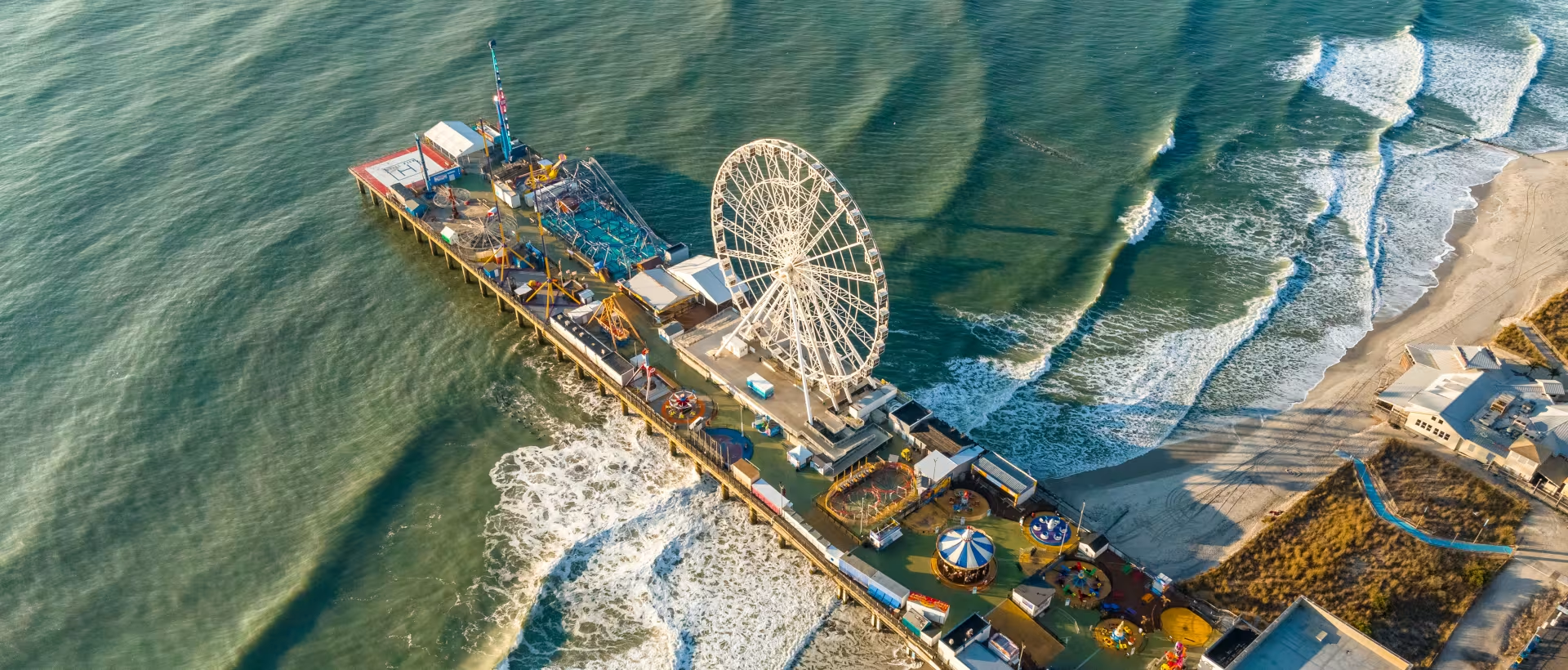
Background Atlantic City is a traditional resort city located on the southeastern coast of New Jersey. Historically, the city evolved into a regional beach destination connected to the larger Northeast and Mid-Atlantic markets—particularly Philadelphia and New York. Today, Atlantic City remains a tourism hub, drawing visitors to its beaches, boardwalk, […]
From Nile Dependence to Fit-for-Purpose Reuse: A Water Strategy for Alexandria, Egypt
Overview Alexandria, Egypt is a coastal city shaped by water but constrained by freshwater scarcity. Located on the Mediterranean coast at the western edge of the Nile Delta, Alexandria depends overwhelmingly on Nile-derived surface water. This dependence creates a fragile urban water system. Freshwater must travel through canal infrastructure before […]
Decentralized and Sustainable Drinking Water System for Kibera, Nairobi
Executive Summary Kibera faces interconnected water challenges shaped by limited infrastructure, informal settlement, and unequal service provision. Water scarcity, poor water quality, flooding and fragmented governance structure all reinforce each other, making everyday access to safe and affordable water difficult for many residents. In response, this proposal presents an integrated […]
Water Sovereignty & Access in the Navajo Nation
INTRODUCTION The Navajo Nation, whose initial borders were created in 1868 by a treaty with the United States government, is home to 170,000 people—more than half of the tribe’s registered members.i There are several small cities within the reservation; however, much of the area is rural in character. Through the creation of the reservation’s […]
Uniting for Water: Regional Groundwater Management for Flagstaff, Arizona and Beyond
Nestled at the base of the San Francisco Peaks in northern Arizona, Flagstaff is a city renowned for its natural beauty, vibrant community, and unique location along the Colorado Plateau. Beneath this picturesque landscape lies the Coconino Aquifer (C-aquifer), a vast groundwater resource spanning four states and two tribal nations. […]
Reclamagua: A Wastewater Reuse Policy for Tenerife, Spain
Context Tenerife, Spain, is the biggest island in the Canary chain off the Western coast of Africa. The Canaries’ volcanic origins mean their geography is quite diverse from island to island, but their warm climate, beautiful beaches, and diverse landscapes make them a popular tourist spot (1). However, the very […]
WATER RECYCLE/ REUSE SYSTEMS FOR A RESILIENT SENDAI, JAPAN
Abstract Sendai – A City at Risk Sendai, a bustling metropolis nestled along Japan’s picturesque coastline, is a city intimately acquainted with the capricious nature of its environment. Earthquakes, tsunamis, and floods are recurring threats, leaving an indelible mark on the city’s history and infrastructure. The Great East Japan Earthquake […]
Overcoming Groundwater Overreliance in Jabalpur with Metering and Stormwater Management
Introduction Jabalpur, a growing and urbanizing city in the central Indian state of Madhya Pradesh, has been grappling with critical challenges related to its water supply since the early 2000s. It has an estimated population of 1.5 million, which is expected to grow close to 2 million in the next […]
A Three-Pronged Approach for Subsidence in Queretaro, Mexico
Background The city of Queretaro is the capital of the state of Queretaro, located in central Mexico. About 200 km northwest of Mexico City, Queretaro has an arid to semi-arid climate with an average yearly temperature around 70°F and a yearly precipitation of only 374.6 mm (Comision Nacional del Agua, […]