Context Charleston is the capital of West Virginia and the state’s most populous city. It is home to 47,000 residents and is at the core of a metropolitan area of more than 200,000 people. Like many other Rust Belt communities, Charleston’s population has been declining for several decades and is […]
North America
ONE WATER MANAGING ENTITY – REFORMING WATER RATES AND RESILIENCE FUNDING IN ATLANTIC CITY, NJ
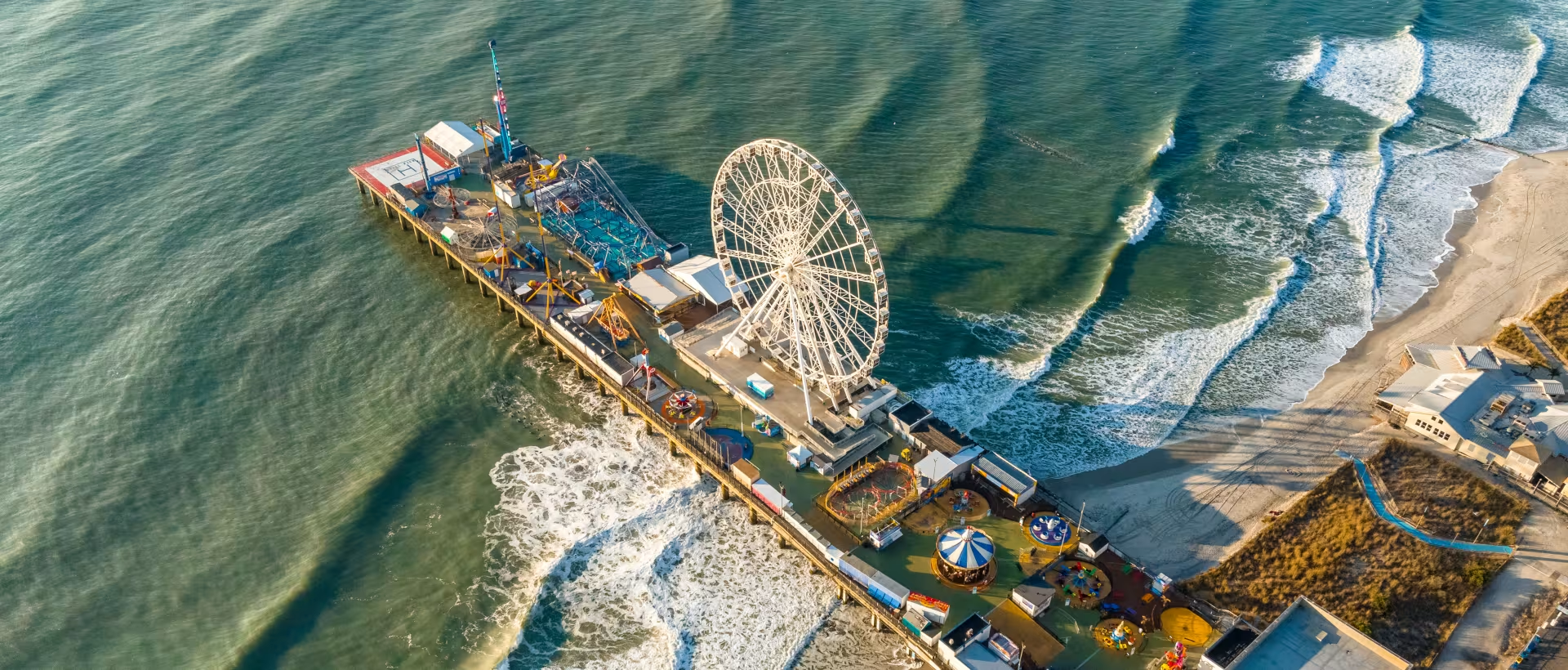
Background Atlantic City is a traditional resort city located on the southeastern coast of New Jersey. Historically, the city evolved into a regional beach destination connected to the larger Northeast and Mid-Atlantic markets—particularly Philadelphia and New York. Today, Atlantic City remains a tourism hub, drawing visitors to its beaches, boardwalk, […]
A Hybrid Future for Halifax, NS, Canada: Integrating Decentralized Wastewater System for Resiliency
A stark reminder that even with modern, expensive treatment plants, Halifax’s system remains dangerously vulnerable. Halifax’s wastewater system remains vulnerable because large flows depend on a centralized network of trunk sewers and pump stations. Climate change increases this risk: extreme rainfall drives higher wet-weather volumes, while sea-level rise, high tides, […]
Addressing Flooding with Regional Planning in Chelsea, MA
Introduction Chelsea, Massachusetts is located on Boston Harbor along the northern banks of the Mystic River. Mill Creek and the Chelsea River bound the city in the North and East, respectively. The city’s geography makes it particularly vulnerable to coastal storm surges and sea level rise as well as pluvial […]
Modular Management: Water System Redundancy and Resilience in Asheville, NC
Western North Carolina faces several large challenges to modernize its water infrastructure and secure auxiliary systems that mitigate harm in the event of failure. Hurricane Helene’s impact displayed severe deficiencies in regional water management; specifically, in the region’s largest city of Asheville, water access was unavailable to some communities for […]
Water Sovereignty & Access in the Navajo Nation
INTRODUCTION The Navajo Nation, whose initial borders were created in 1868 by a treaty with the United States government, is home to 170,000 people—more than half of the tribe’s registered members.i There are several small cities within the reservation; however, much of the area is rural in character. Through the creation of the reservation’s […]
UHelp Needs Help: Tackling Water Assistance Program Funding for Low-Income Residents in the City of Spokane, WA
Background In Washington, Spokane City is home to 22,200 residents, 3,900 of which live in poverty (Data USA, 2024). Spokane residents obtain their utilities services from the Public Works and Utilities department. They pump all drinking water from the Spokane Valley-Rathdrum Prairie Aquifer through eight wells scattered across the city […]
Uniting for Water: Regional Groundwater Management for Flagstaff, Arizona and Beyond
Nestled at the base of the San Francisco Peaks in northern Arizona, Flagstaff is a city renowned for its natural beauty, vibrant community, and unique location along the Colorado Plateau. Beneath this picturesque landscape lies the Coconino Aquifer (C-aquifer), a vast groundwater resource spanning four states and two tribal nations. […]
Building Resilience: A Strategic Approach to Managing Flooding in Montpelier, Vermont
Introduction Montpelier, the capital of Vermont and the smallest U.S. capital by population with approximately 8,000 residents, is located in Washington County at the confluence of the Winooski River and its tributaries, the North Branch and Stevens Branch (City of Montpelier, “Welcome to Montpelier”; Figure 1). Montpelier’s river-centered valley and […]
Facing Scarcity with Proactive Preparation: A Reform of Water Infrastructure and Policy in Del Rio, TX
San Felipe Springs, Image Source: The Desert Chronicles